Industrial IoT (IIoT) Platform Explained: Complete Guide to Smart Manufacturing & Industry 4.0 (2026)
Understand IIoT architecture, industrial protocols, edge computing, and how connected factory ecosystems empower predictive manufacturing.
Dalnex Team
Industrial IoT & Edge Architecture Specialists
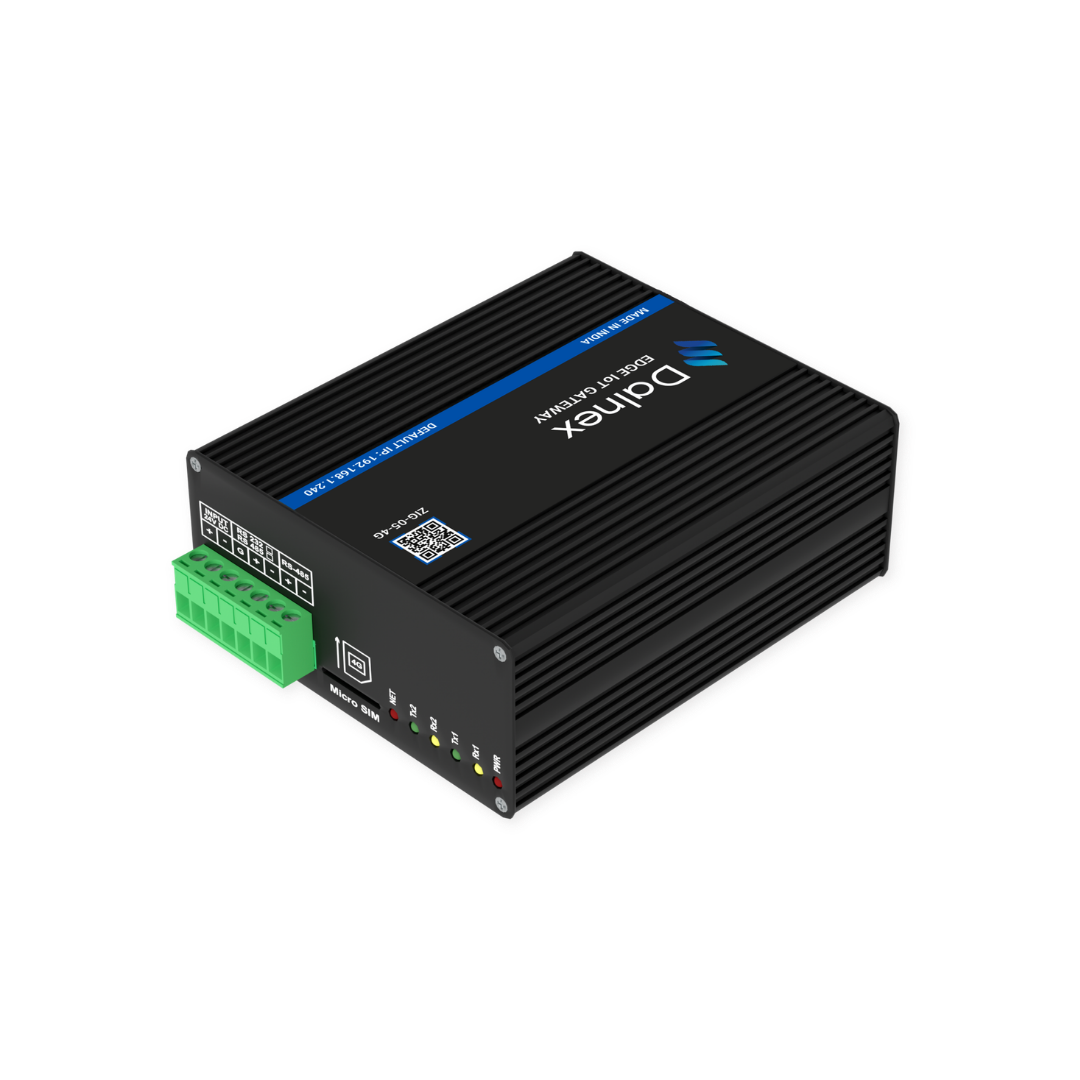
Manufacturing is undergoing a rapid digital transformation. Traditional factories that once relied on isolated machines, manual reporting, and reactive maintenance are evolving into connected, intelligent, and data-driven operations.
At the heart of this transformation is the Industrial Internet of Things (IIoT).
An Industrial IoT (IIoT) Platform enables manufacturers to connect machines, sensors, PLCs, and industrial devices into a centralized system that collects, processes, and analyzes real-time production data. This allows businesses to improve productivity, reduce downtime, optimize maintenance, monitor energy consumption, and make faster operational decisions.
Whether you're operating an automotive plant, injection molding facility, packaging line, or pharmaceutical factory, an Industrial IoT platform serves as the digital foundation for implementing Industry 4.0 initiatives.
What is an Industrial IoT (IIoT) Platform?
An Industrial IoT (IIoT) Platform is a software and hardware ecosystem that connects industrial machines, sensors, controllers, and devices to collect, process, and analyze operational data in real time.
- Connects diverse production machines across brands and vintages
- Collects live operational telemetry directly at the edge
- Monitors equipment status, health, and throughput remotely
- Analyzes machine performance trends and micro-stoppages
- Generates real-time dashboards for operators and executives
- Automates alerts and preventive maintenance triggers
- Improves Overall Equipment Effectiveness (OEE)
- Acts as the digital backbone for smart factory transformation
Why Manufacturers Need an IIoT Platform
Modern factories generate enormous amounts of machine data every second. Without a centralized platform, this valuable data remains stranded in machine controllers:
- Limited visibility into machine operation and idle periods
- Frequent and costly equipment breakdowns
- Tedious manual production reporting on spreadsheets
- Excessive and unbudgeted maintenance costs
- Low and unmonitored machine utilization
- Unplanned downtime stalling downstream lines
- Poor energy efficiency and unmonitored peak loads
- Absence of unified production analytics across lines and plants
How Does an Industrial IoT Platform Work?
The five sequential stages converting raw electrical signals into high-level business intelligence
Data Collection from Shopfloor Assets
Industrial data is gathered continuously from PLCs, CNC machines, injection molding presses, vibration sensors, energy meters, barcode scanners, vision systems, and industrial controllers.
Edge Connectivity & Protocol Translation
Industrial IoT Gateways interface with legacy and modern machines using robust protocols: MQTT, OPC UA, Modbus TCP/RTU, Ethernet/IP, and Profinet, transmitting encrypted data securely.
Real-Time Data Processing
The platform normalizes high-frequency telemetry to compute Machine Status, Production Count, Cycle Times, Downtime Durations, Alarm Events, Machine Utilization, and Energy Usage.
Operational Visualization & Dashboards
Live visuals display Production Output, Machine Status, Downtime Pareto, OEE scorecards, and shift progress across floor monitors, tablets, and phones.
Action, Automation & Workflows
The platform triggers automated push alerts to technicians, opens maintenance work orders, issues daily management reports, and feeds predictive AI models.
Core Architecture Components of an IIoT Platform
- Industrial IoT Gateway: Acts as the physical and cyber bridge between shopfloor machines and software infrastructure.
- Device & Protocol Connectivity: Native support for multi-vendor PLCs (Siemens, Mitsubishi, Rockwell, Omron, Delta) and industrial buses.
- Scalable Data Storage: Time-series and relational databases storing millions of telemetry data points for long-term trend analysis.
- Analytics Engine: High-speed analytics processing raw machine pulses into OEE metrics, cycle time variance, and anomaly patterns.
- Customizable Dashboards: Tailored interfaces for machine operators, cell leaders, maintenance supervisors, and C-suite leadership.
- Real-Time Alerts Engine: Rule-based threshold alerts informing stakeholders of stops, temperature spikes, or target slips.
- Enterprise API Integration: Bi-directional REST and webhook connectivity with ERP, MES, CMMS, CRM, and BI software (Power BI, Tableau).
Industrial IoT Platform vs SCADA vs MES
| Feature / Capability | IIoT Platform | SCADA | MES |
|---|---|---|---|
| Real-Time Machine Monitoring | Yes | Yes | Limited |
| Cloud & Hybrid Connectivity | Yes | Limited | Limited |
| OEE Monitoring & Analysis | Yes | Partial | Yes |
| Multi-Plant Enterprise Visibility | Yes | Limited | Partial |
| AI & Predictive Analytics | Yes | No | Limited |
| Remote Mobile Access | Yes | Limited | Partial |
| Automated Production Reporting | Yes | Basic | Advanced |
| Seamless ERP Integration | Yes | Partial | Yes |
Key Operational Benefits
- Real-Time Visibility: Supervise every connected machine across multiple lines and factories from a centralized screen.
- Reduced Downtime: Automated push alerts notify maintenance teams immediately when an asset stops or drifts from normal parameters.
- Improved Productivity: Identify line bottlenecks and optimize work-in-progress flow without guesswork.
- Accurate OEE Tracking: Continuously measure availability, performance speed, and quality with zero manual calculation errors.
- Lower Maintenance Costs: Transition from reactive firefighting to proactive, condition-based maintenance.
- Optimized Energy Efficiency: Correlate power draw with machine cycles to eliminate idle energy waste and peak tariffs.
- Enhanced Decision-Making: Align team daily targets around live, undeniable machine truth.
- Scalable Digital Transformation: Start with a single pilot cell and seamlessly expand across all plants worldwide.
Best Practices for Implementing an IIoT Platform
Define Clear Business Objectives
Establish tangible targets such as improving OEE by 10%, cutting setup time by 20%, or tracking kilowatt-hour per part.
Identify Target Machines & Signal Points
Catalog critical production assets, controller types, sensor requirements, and physical network topologies.
Deploy Industrial Edge Gateways
Install secure IoT hardware at machine panels, interfacing with PLC registers, relay contacts, or external sensors.
Configure Role-Based Dashboards & KPIs
Build dedicated views for machine operators, plant supervisors, quality engineers, and maintenance chiefs.
Train Line Operators & Maintenance Teams
Ensure staff know how to interpret real-time visuals, acknowledge notifications, and log stoppage reason codes.
Continuously Analyze & Optimize Processes
Leverage collected telemetry in weekly Lean Kaizen reviews to continuously eliminate losses and scale success.
The Future of Industrial IoT
IIoT platforms are evolving rapidly with cutting-edge innovations that redefine manufacturing autonomy:
- Artificial Intelligence & Machine Learning: Automated root-cause detection and predictive quality forecasting.
- Digital Twins: Real-time 3D simulation of physical machines and shopfloor material flows.
- Predictive Maintenance Algorithms: Predicting component failure weeks before catastrophic breakdowns occur.
- Edge AI Computing: Running ultra-low latency vision and anomaly detection models directly on the edge gateway.
- Private 5G Connectivity: Ultra-reliable wireless machine telemetry with zero cable clutter.
- Generative AI Shopfloor Assistants: Natural language conversational interfaces (like Dalnex AIRA) for instant machine troubleshooting.
Frequently Asked Questions
Ready to Accelerate Your Industry 4.0 Journey?
Dalnex's Industrial IoT solutions help manufacturers connect machines, collect real-time production data, monitor OEE, reduce downtime, and build scalable smart factory ecosystems.
Experience Dalnex Smart Manufacturing
Connect your machines, eliminate blind spots, and achieve measurable OEE improvements in as little as 30 days with FactOS & VisionOS.
Related Manufacturing Guides
What is a Factory Operating System? Meet FactOS by Dalnex – The Complete Guide for Smart Manufacturers (2026)
Discover how a modern Factory Operating System connects machines, people, and processes to boost OEE and eliminate shopfloor downtime.
Read Guide Production MonitoringProduction Monitoring Software: Complete Guide to Features, Benefits, ROI & Implementation (2026)
Learn how automated production tracking unlocks actionable shopfloor insights, slashes downtime, and maximizes plant profitability.
Read Guide OEE & AnalyticsOverall Equipment Effectiveness (OEE): Complete Guide to Improving Manufacturing Performance (2026)
Master the OEE formula, identify the Six Big Losses, benchmark your plant against world-class standards, and drive continuous productivity.
Read Guide